How to Hide in Drawings
Camouflage, placement, and stillness — win rounds by disappearing into the art.
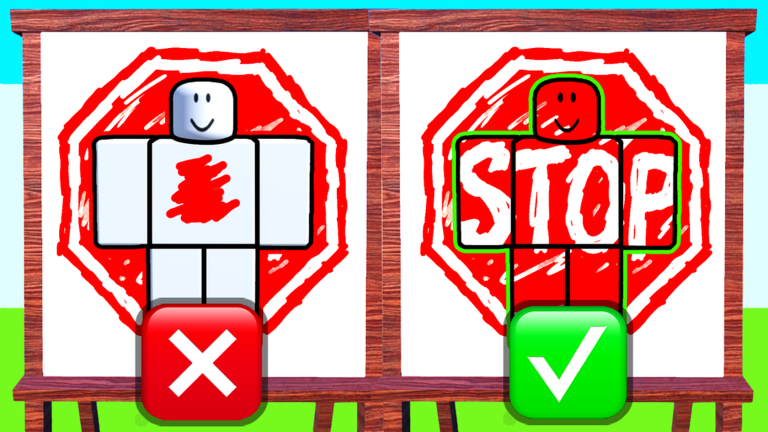
Why hiding decides most rounds
In Hide In Drawings, both players hunt. If your placement is weak, a sharp seeker ends the round before you finish your first scan. Strong hiding buys time: time to clear quadrants, time to bait, time to force a mistake. This guide focuses only on not being found.
Pair it with How to Spot after you can consistently survive the opening ten seconds. New players should skim Getting Started first.
Read the drawing before you move
Spend the first moments studying the art instead of sprinting to a random corner.
- Find busy zones — cross-hatching, foliage, crowds, scribbles.
- Find dead zones — flat sky, empty walls, solid color blocks.
- Find false magnets — the main character or title object that every seeker checks first.
- Pick a secondary pattern that matches your outline better than the magnet.
Busy zones raise the cost of a correct spot. Dead zones make you a sticker.
Placement principles
Break your silhouette
Stand where existing lines cut across your body shape. Overlap with strokes that already look like limbs, branches, or props. If your outline is a clean human blob on blank paper, you lose.
Match value, not just color
Seekers notice brightness clashes as fast as hue clashes. Nestle into mid-tones when the rival is scanning high-contrast edges.
Prefer edges of clusters, not centers of fame
The exact center of the most interesting object is tourist camping. Slightly off-center inside a cluster reads as part of the art.
Commit early, adjust once
Micro-repositioning after the hunt starts creates motion tells. Make one thoughtful move, then trust it.
Stillness and camera discipline while hidden
You still need to search. Do it with minimal body movement:
- Rotate the camera more than the character.
- Avoid hopping or emoting.
- When you pan, pause on suspicious seams instead of constantly sweeping.
- If you must reposition, do it in one decisive step during a moment you expect the rival to be looking elsewhere — never a guarantee, but better than jittering.
Spot types ranked for hiders
Use this quick grade, then see the full Tier List for meta notes:
| Spot type | Hider grade | Why |
|---|---|---|
| Dense pattern clusters | S | High visual noise |
| Line-heavy sketch corners | A | Silhouette breaks naturally |
| Mid-ground props | B | Solid if value matches |
| Main focal character | C | Checked first by seekers |
| Flat empty backgrounds | F | Instant reads |
Mind games that actually help
Bait then slide (early only). Start near an obvious magnet during placement, then settle one body-length away before the hunt locks in — only if the mode still allows that window.
Asymmetry. Humans scan symmetrical compositions toward the center. Slightly biased positions near busy left or right thirds work well.
Patience after a near miss. If the rival camera passes you, do not panic-move. Panic is how close calls become losses.
Mistakes that get you spotted
- Hiding on pure white / pure black voids
- Standing on the biggest face in the drawing
- Bobbing in place
- Bright cosmetics that ignore the palette — fix spending habits via Cosmetics & Money
- Ignoring patch notes when maps or lighting change on Updates
Drill: three matches, hide-only goals
- Match one: only busy-zone hides. Ignore spotting score.
- Match two: only off-center cluster hides.
- Match three: combine stillness with a full seeker sweep from How to Spot.
Log what failed. Compare notes with habits on the Players Hub.
Related links
- Getting Started
- How to Spot
- Tier List
- Codes
- Scripts — stay fair; bans are real
Master hiding first. Spotting becomes easier when you are not panicked about your own silhouette.
Frequently Asked Questions
Quick answers to the most common questions.
Where should I hide in Hide In Drawings?
Choose busy pattern clusters and line-heavy corners that break your silhouette. Avoid flat backgrounds and the main focal character.
Should I keep moving while hidden?
No. Minimize movement. Pan the camera to search and keep your character still.
Do cosmetics affect hiding?
Yes. Loud or mismatched cosmetics can make you easier to read. See Cosmetics & Money.
What should I read next?
Continue with How to Spot and the Tier List.